
Date: 2025
Project Type: Concept App
Vaulted Sneaker: Owning The Collection
The Vaulted Sneaker App was designed as a conceptual mobile platform for sneaker collectors to organize, track, and better understand their collections. The goal of this project was to create a system that focuses on ownership rather than resale, allowing users to manage their sneakers, monitor value over time, and track wear and condition in a simple and intuitive way.
Background & Industry Context
“Why do we collect”? For most collectors it’s for the history, and others it’s just the trend. I’d place shoe collecting at a blend between style, identity, and value. For a lot of collectors, “Kicks” are wearable memories with each pair tied to a specific release, era, or personal moment. However, the rise of the secondary market has made things like condition, rarity, and value part of everyday sneaker conversations, even for people who’s not trying to resell. The problem with the shoe culture now is that most existing platforms are centered around hype and transactions, not ownership.
After reviewing current sneaker Platforms like StockX, Goat, and Flight Club, a consistent pattern stood out to me. I’ve noticed most apps are designed for buying, selling, and trading. I’ve also noticed that collection management is often treated as a secondary feature. In a way StockX and SNKRS has turned shoe culture into the stock exchange. Pricing data is easy to find within these platforms, however many users continue to fall back on personal calendars, and memory to keep track of their shoes. This often leads to collectors buying duplicates or having the slightest idea of their collections true worth. These are the issues helped shape the direction of this app as a collection-first experience that focuses on organization, visibility, and assistance with better personal decision making over pushing the “Culture Vulture”, buy and sell industry trend.
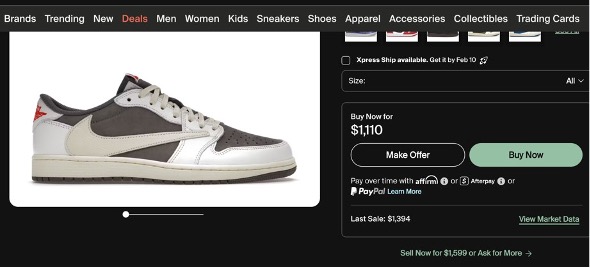
Competitive Review & Design Opportunity
During research I noticed a trend in the various sneaker apps. I found that most of these platforms are built around resale value. Websites like StockX is often the cheapest resale option because it connects directly from seller to consumers. Many websites are centered around pricing and authentication. However, StockX faced backlash regarding their verification practices. For your typical collectors who aren’t actively trading find the experience can be overwhelming, causing a disconnection with how they engage with their shoes. Important details like storage, condition, and personal notes are often pushed aside on the popular platforms. This discovery created the idea of an app that’s built on collector ownership rather than focusing on what’s trending. This experience for the user is about understanding the collection as it is today, helping users see what they own, and keeping track for upcoming releases.

User Personas
The persona development helped me clarify who this app is really for and how it fits into their everyday behavior. From personal experience along with research, I’ve noticed there are different types of sneaker owners, from the detail-oriented, to the more culture-driven enthusiasts. A common thread emerged with keeping track of their collection. From a personal standpoint I can relate to duplicating purchases, the uncertainty of storage, and completely forgotten pairs of shoes. The personas reinforced the need for a centralized, low friction way to document the sneaker collection all while providing a supportive and less overwhelming user experience.
Marcus (Archivist): Uses app to accurately document and organize his sneaker collection for long time reference, would be considered the O.G. Collector.
Sarah (Rotator): Easy tracking of fashion trends, wear and tear, condition, and rotation so she know when and where to wear sneakers based on occasion.
Kevin (Analyst): Tracks sneaker value, compares to the retail price to help decide when a pair is worth selling elsewhere
OBJECT MAPPING / MoSCoW ANALYSIS/CTA MATRIX
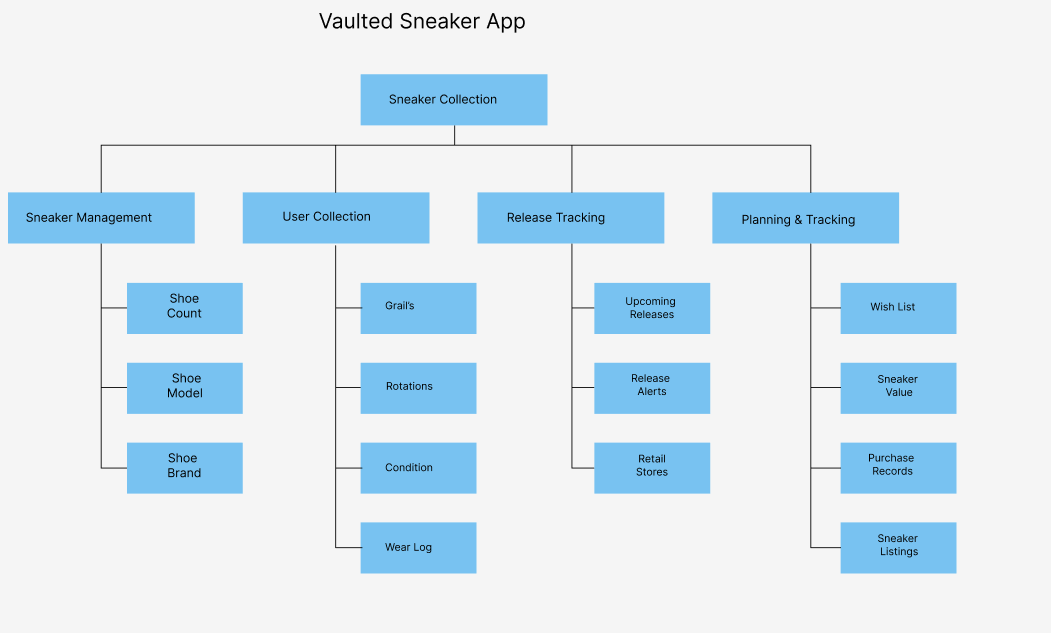
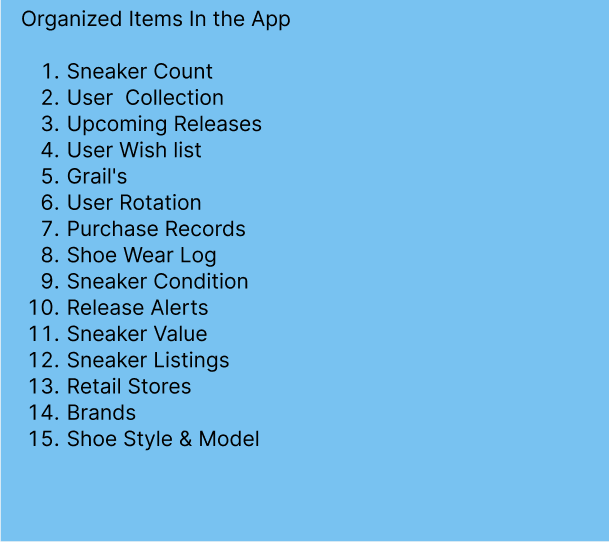
The goal of this stage was to define the overall structure of the app and identify the key features to focus on during early design exploration. I began by organizing the system around a central object, the Sneaker Collection, and mapped out briefly how different features connect to user behavior, such as managing, tracking, and planning their collection.
The abridged object map established four primary categories: Sneaker Management, User Collection, Release Tracking, and Planning & Tracking. This structure helped ensure that all features were grouped logically based on how users interact with their sneakers, from ownership to long-term tracking.
This prioritization ensured that the core experience focused on collection management and tracking, rather than resale or marketplace features. By clearly defining what would not be included, the scope of the project remained focused and aligned with the goal of creating a tool specifically for sneaker ownership and organization.
MoSCoW Analysis & CTA Matrix
The MoSCoW Analysis and CTA Matrix helped me break down what actions matter most in the Sneaker Collection app. The focus is based on defining essential features and functions that allow users to manage, track, and understand their sneaker collection without unnecessary complexities.
Must Have
- Add a Sneaker
- View Sneaker Collection
- Edit Sneaker
- Delete Sneaker
- Check Condition
- Track Price Trends
- Real-Time Release/Restock Calendar Should Have
- Search Sneaker
- Filter Collection
- Track wear/Last worn
- Add notes to sneakers Could Have
- Sneaker Wishlist
- Estimated value
- Share Collection Won’t Have
- Buying or Selling on the app
- Third party resale platform
- External Authentication Marketplace
CTA Matrix

Exploration Sketches
During this stage I explored multiple layout directions and interaction patterns for key areas of the app, focusing on how users would view their collection, track sneaker data and add new items. The images show walks you through the process of a collector using the app. Based on the images the Vaulted sneaker app helps users to quickly check what they already own, search their digital closet, and view detailed information like condition, market value, and value trends over time. Features like a release calendar and reminders help users stay ahead of upcoming drops while comparing new releases to what’s already in their collection.

System Sketches
This stage focused on three major feature details. I wanted to place focus on the Sneaker details, Add/Edit Sneaker, and the Digital Closet.
1. Sneaker Details

What it is:
A detailed view of each sneaker that shows value, wear history, condition, and related data.
Needs Improvement:
There can be sturdier focus on value and stats make the feature feel useful and informative. Multiple layout options to improve flexibility. Also, market listings to add real-world context would be beneficial for the user.
Needs Improvement:
The data presentation needs to be simplified to avoid clutter. Timeline and value tracking should be clearer and easier to scan. Important actions like edit, and track wear need stronger visibility
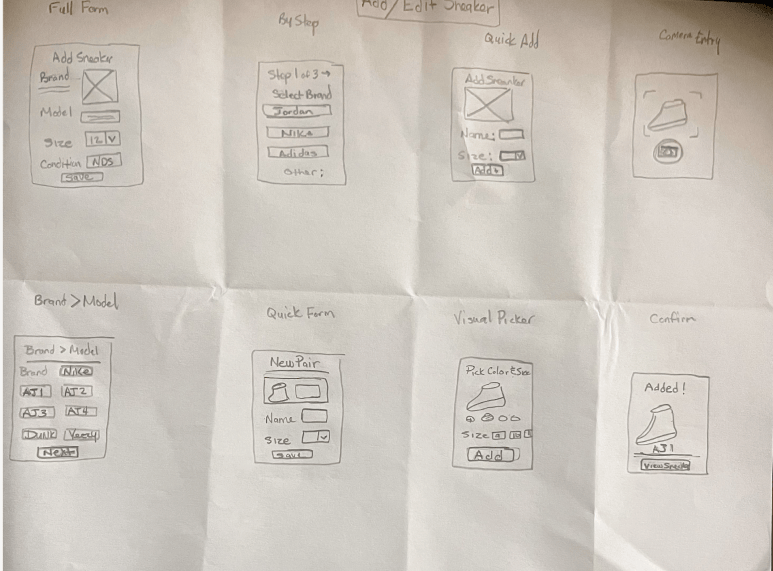
2. Add / Edit Sneaker
What it is:
A system that allows users to input and manage sneaker information through different entry methods.
Likes:
Multiple entry options (full form, quick add, camera entry) improve usability. Step-by-step flow helps guide new users. Visual picker simplifies model and style selection Needs Improvement:
Some flows feel repetitive and could be streamlined. Form fields need better hierarchy and grouping. Refinement in the confirmation notification
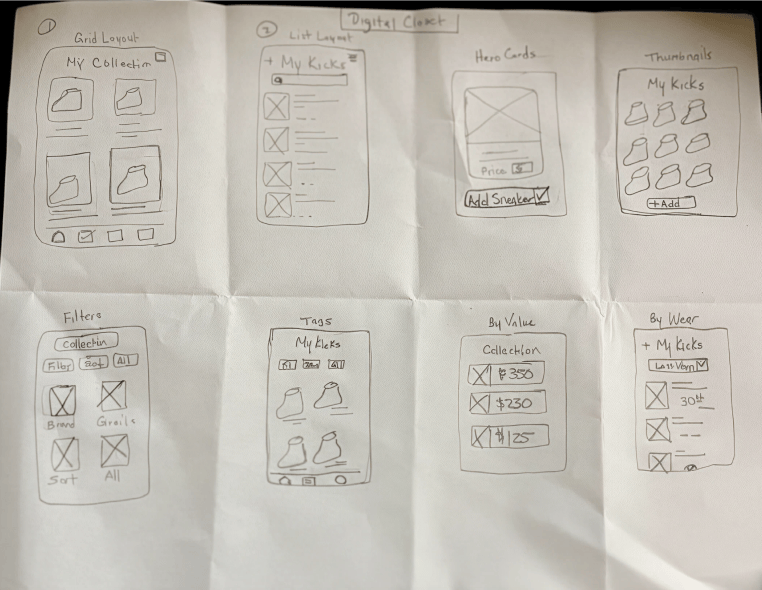
3. Digital Closet
What it is:
The main location where users can browse, filter, and organize their sneakers.
Likes:
Grid and list layouts provide flexibility for different user preferences. Filters and tags allow better organization of large collections. Sorting by value and wear adds meaningful ways to explore data.
Needs Improvement:
Layout consistency needs refinement across views. Filters need to be easier to access. The overall layout can be improved for quicker scanning.
Home Screen Elements & Sketches
This stage explored how users would first interact with the app, focusing on navigation, layout, and quick access to key features.

I explored icon sketches to test different structures for displaying collections, adding sneakers, and navigating the app.

Key Takeaways
I enjoyed the development of this app. As a sneaker head, many of the pain points were relatable, thus making a conceptual app such as this a smooth process. There are some areas where I over analyzed ideations in the process. I was leaning toward what I believe would be cool, instead of practicality as seen in my icon’s sketches. In a future lay out all the Vaulted Icons will be practical and simpler for the user to understand when using the app.
Next Steps
The next steps will be the creation of tighter sketches and testing task such as adding a sneaker, viewing sneaker details, and navigating the sneaker closet. Once tighter sketches are completed, I will follow up and conduct a paper prototyping test to validate the core features of the app. These tests will help identify usability and allow refinement to interactions before moving into wireframes and high-fidelity design.
Conclusion
This project has come together in a way that feels both practical and meaningful. The focus on real ownership, tracking and data gives the app a strong foundation that separates it from existing platforms. Moving forward I plan to continue developing this concept by refining the design, gathering feedback from peers and other designers, and potentially turning this into a fully developed product. As an active Sneaker Head, I would like to explore building this into a real application and possibly creating a pitch for further development
